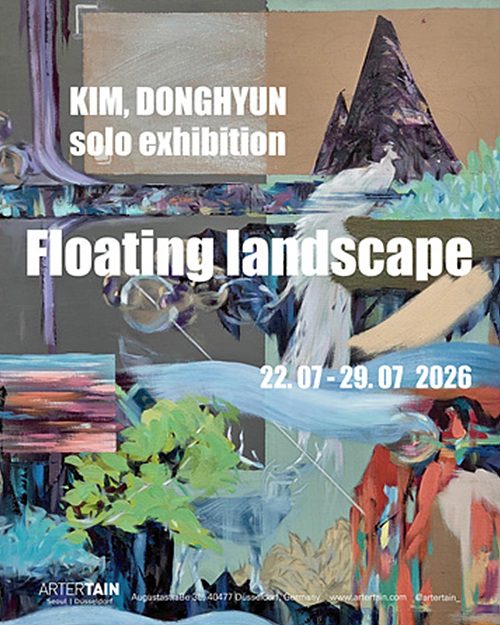
Title : Floating Landscape
Date : 22. Jul. ~ 29. Jul., 2026
Opening : 22. Jul., Wed., 4 pm
Place : Artertain (Augustastrasse 31, 40477, Duesseldorf. Germany)
Curator : Heeseung Hwang (+82 (0)2-6160-8445)
Dusseldorf,
22. July, 2026
The Most Comfortable Place, There,
a Shelter
Today, we live amid an overwhelming excess of images. Or perhaps “live”
is not quite the right word; it may be more accurate to say that we
are compelled to live within them. This saturation of images, though
a relatively recent phenomenon, has emerged from the astonishing development
of a media environment that has expanded beyond anything we could have
imagined. Images are copied and recopied in an endless cycle, like an
ouroboros whose beginning and end can no longer be distinguished. Every
entity capable of producing images now generates and consumes them within
its own world, creating an environment in which images ceaselessly circulate.
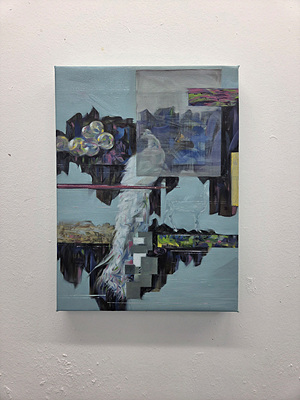
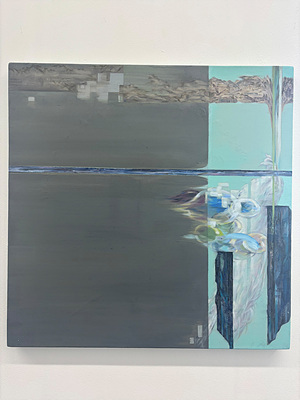
Painting may be one way of returning these images to their purest state.
Of course, I am well aware of how difficult it is to define what “pure”
might mean here. Yet the story changes when, at the center of these
images, there is a creative subject capable of thinking and reading
the times. This becomes even more significant when painting begins with
the physical act of painting and expands into the realm of thought.
At such a point, painting may be able to withstand what we have come
to call the flood or excess of images.
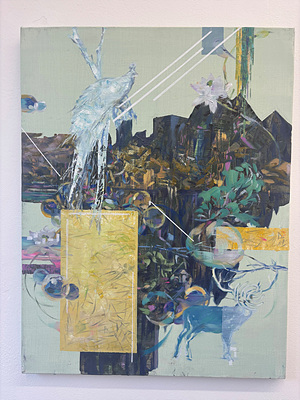
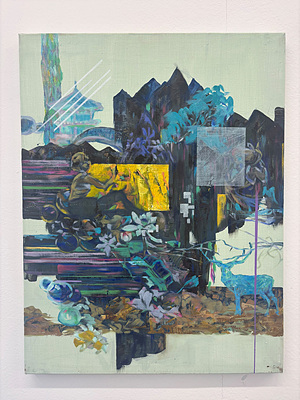
Kim Donghyun’s painting begins precisely at the moment when this contemporary
image environment is interpreted as a kind of contemplative landscape.
His landscapes are not so much representations of nature as complex
structures in which memory and image, myth and cultural signs overlap
to form an expansive visual discourse.
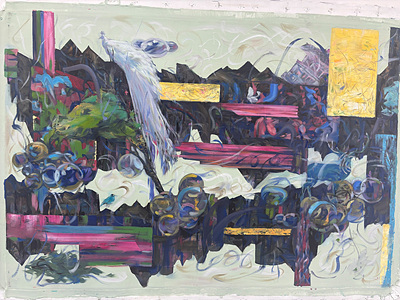
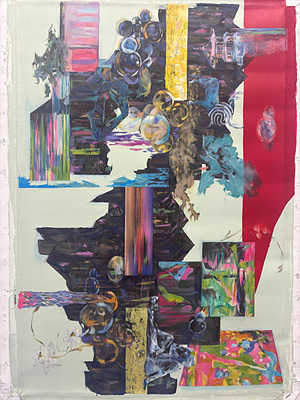
The pictorial space constructed by the artist can be connected to Henri
Bergson’s concept of time, particularly his notion of duration. Bergsonian
duration is not physical time that can be divided into measurable units.
It is an inner flow in which memories and experiences permeate and interact
with one another. The past does not simply recede and disappear with
the passage of chronological time. It remains as memory, continually
transforming itself within the present and combining with present sensations
to create new realities.
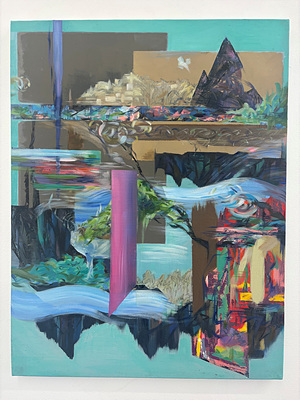
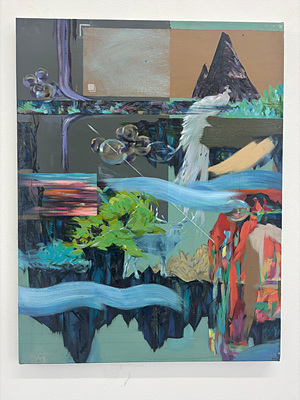
Kim Donghyun’s paintings visually reveal these layers of continuous
time. His images do not exist within any measurable temporality. Rather,
they emerge through the overlapping of memories and symbols that remain
interconnected. Each image carries its own symbolic meaning, yet without
the influence and presence of the others, the significance of its existence
becomes difficult to define.
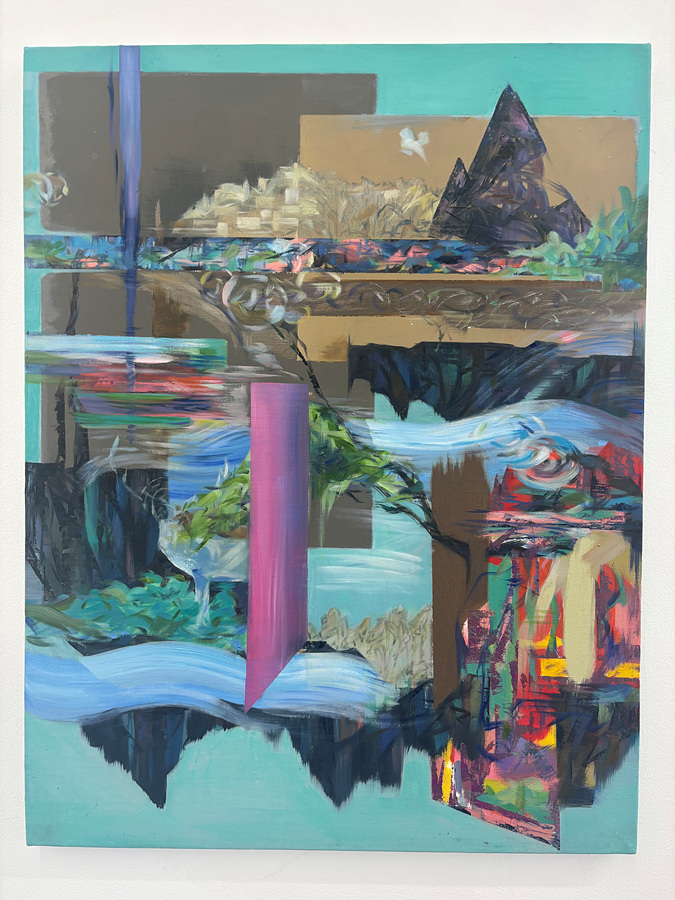
In particular, by drawing upon the contemplative space of traditional
landscape painting, the artist transforms the canvas into a philosophical
space for reflecting upon the diverse relationships of contemporary
life. His pictorial space therefore cannot be understood from a single,
fixed viewpoint. If we read only what his symbols immediately reveal
and fail to recognize the other meanings that lie beneath them, the
significance of the landscape structure he has adopted may itself be
lost. In other words, the artist transforms the structure of traditional
landscape painting within the contemporary environment of image production
and communication. His landscapes are not spaces that reproduce the
order of nature; rather, they are spaces formed through collisions among
the memories embedded within individual images.
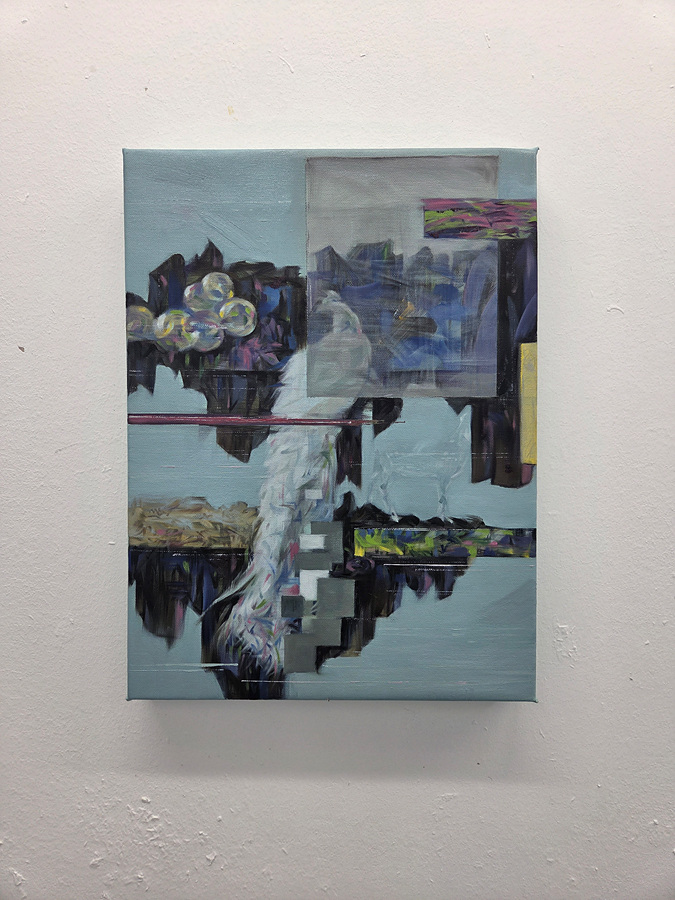
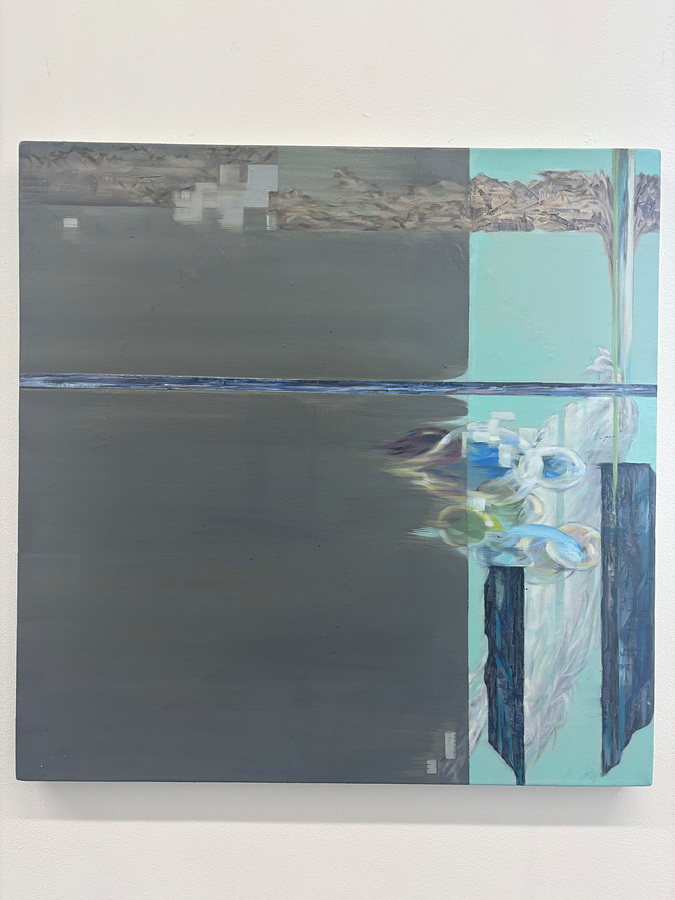
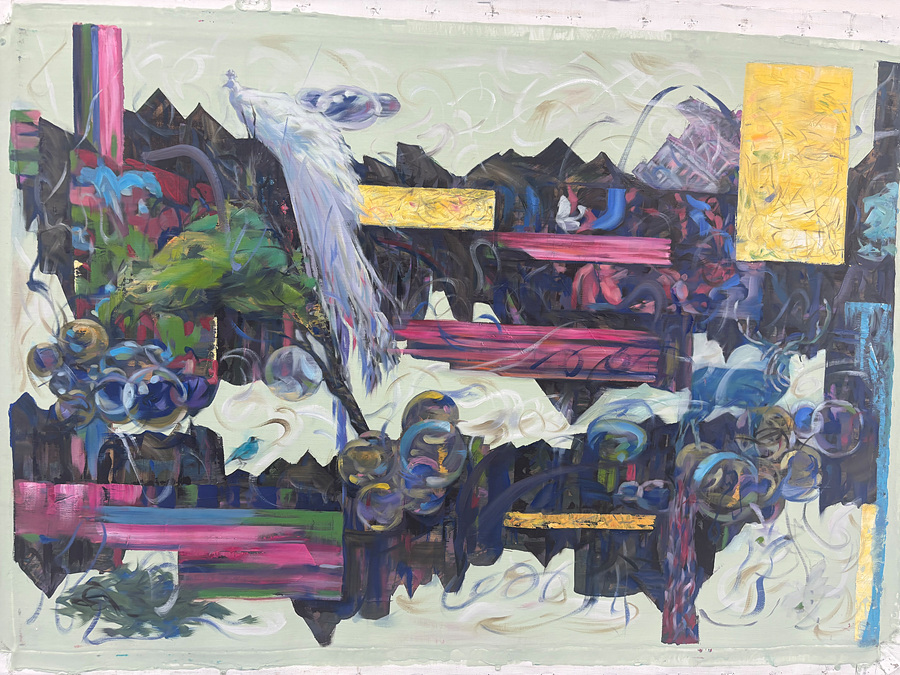
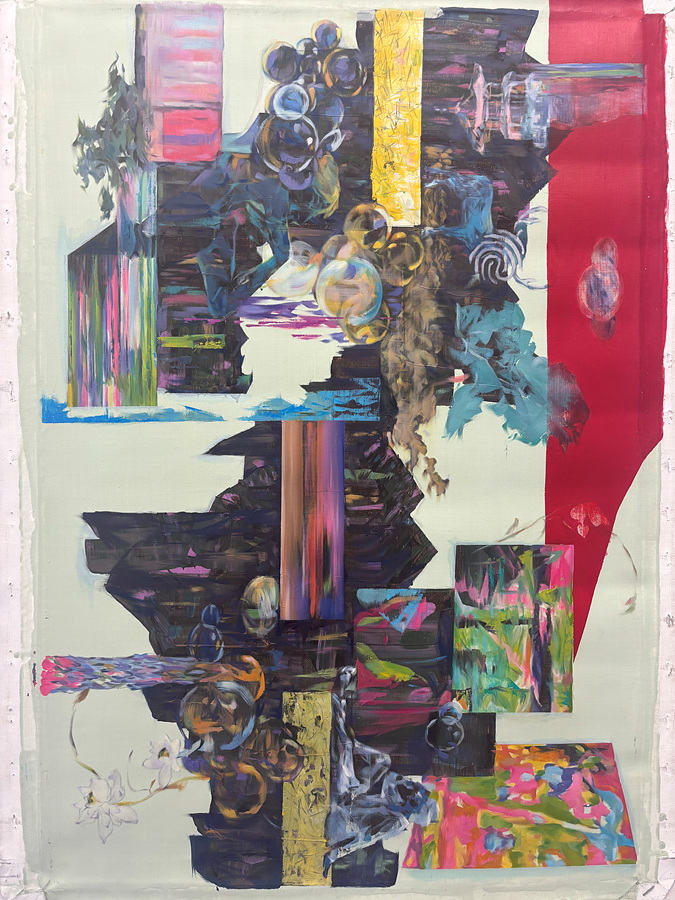
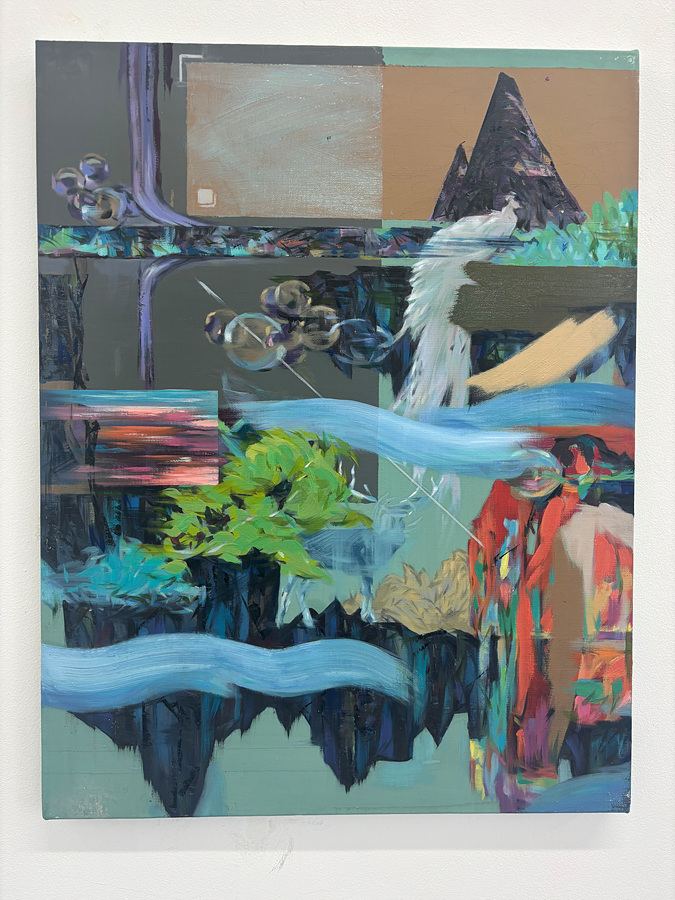
What is particularly striking in his paintings, however, is the inverted
structure of the landscape. Mountains and scenery appearing in the upper
part of the canvas reappear below as reflections or distorted forms,
unsettling the spatial order of traditional landscape painting. As the
relationships between above and below, reality and reflection, original
and reproduction become increasingly ambiguous, the landscape begins
to emerge once again as a space for contemplation?or perhaps as a comfortable
and stable space made possible by a spatial structure we have not previously
known.
This structure symbolically reveals one of the defining characteristics
of the contemporary image environment. In the digital age, images are
endlessly reproduced and expanded, blurring the distinction between
original and copy. They reflect and multiply one another, forming an
immense visual network, yet this very structure can also feel profoundly
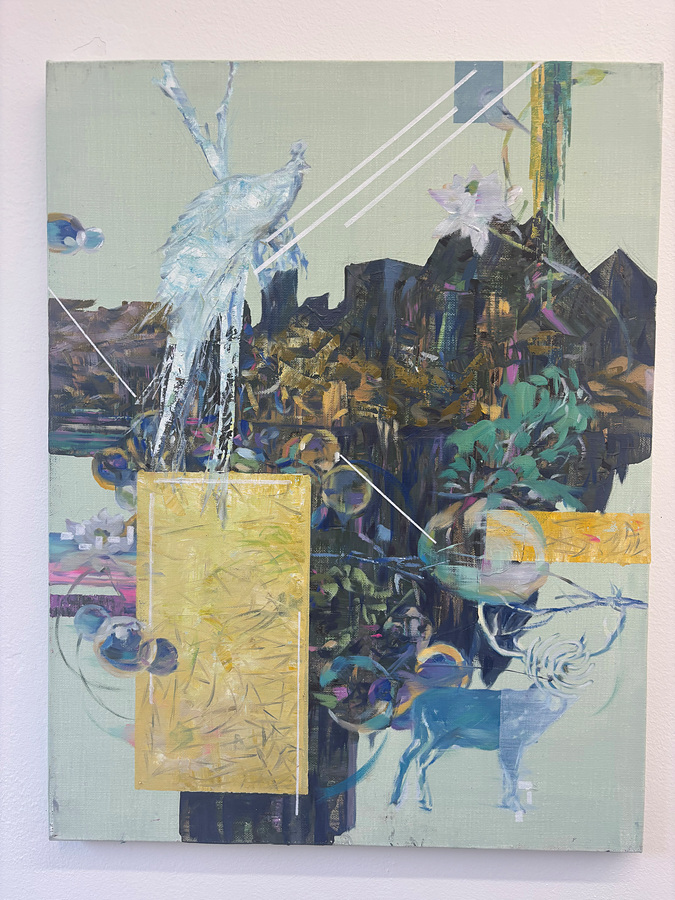
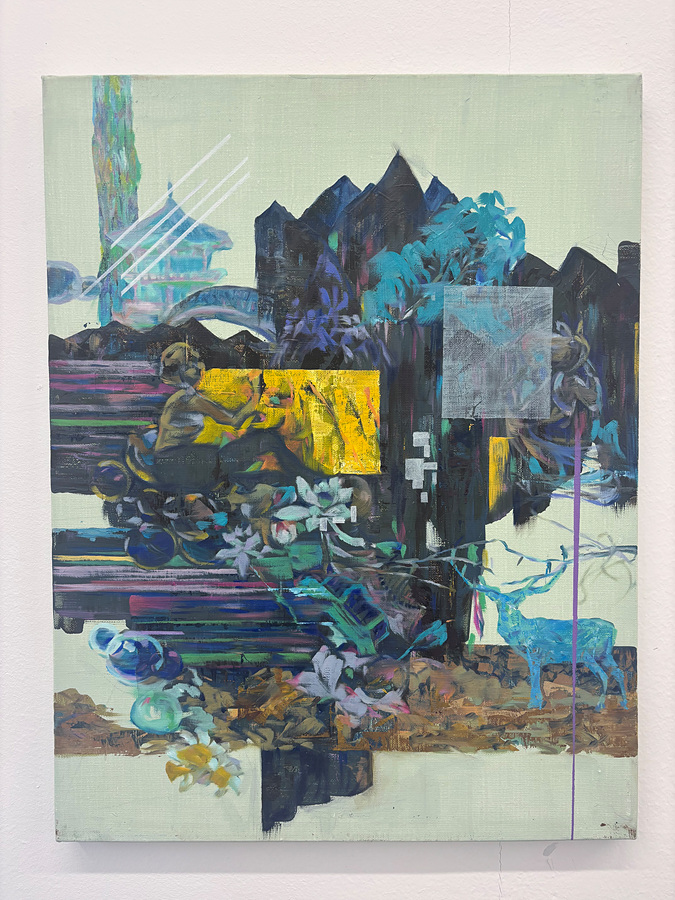
unstable. Kim Donghyun transforms this system of images into the form
of a landscape. Colorful animals and mythological beings, traditional
architectural imagery, and contemporary colors overlap to create a hybrid
world.
Within these hybrid landscapes appear symbolic beings such as a white
peacock, a deer with enormous antlers, and an Icarus gradually losing
his wings. They evoke human desire and mythological narratives. The
white peacock, still left uncolored, is particularly significant: while
it may symbolize display and desire, it also quietly reveals an identity
that remains incomplete. It embodies a possibility yet to be fulfilled,
while at the same time reflecting the self-exhibiting desires of contemporary
society.
Yet this dazzling world of images remains somehow unstable, much like
the inverted landscape itself. A system driven by the endless reproduction
and amplification of images and by the desire for self-display may outwardly
present spectacular and self-satisfying forms, but beneath them lies
a sense of emptiness. Like enormous bubbles swollen beyond their natural
scale, the images in Kim Donghyun’s paintings appear to possess meanings
greater than their original value, while reminding us that their substance
remains fragile enough to collapse at any moment.
Ultimately, Kim Donghyun’s paintings ask where our memories reside
within this world of images, and where we might find the most comfortable
place to which we long to return?our shelter. Perhaps the place we seek
is not some space in the past that has already disappeared. Perhaps
it lingers somewhere within these landscapes, where memory and time
overlap, intermingle, and momentarily come to rest.
In Kim Donghyun’s paintings, perhaps we may find that place?there,
a shelter of our own.
Text by Gustav Daishik Yim
|