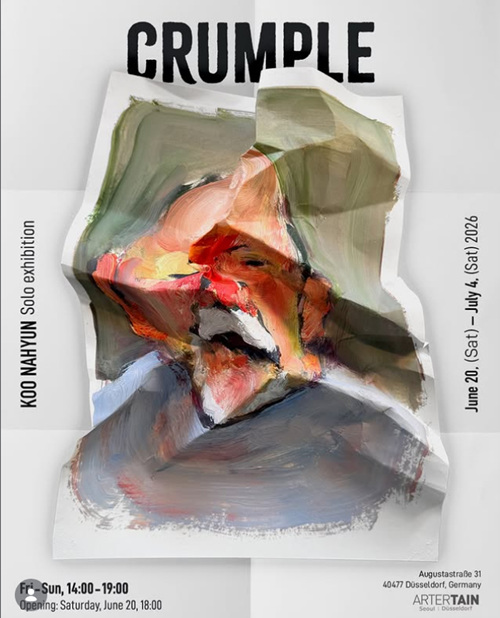
Title : Crumple
Date : 20. Jun. ~ 4. Jul., 2026
Place : Artertain (Augustastrasse 31, 40477, Duesseldorf. Germany)
Curator : Heeseung Hwang (+82 (0)2-6160-8445)
Dusseldorf,
20. June, 2026
The Meaning of Crumpled Things
We believe that we see the world as it is. Yet human perception is always
shaped by experience and memory, emotion, and the worldview we choose
to believe in. This is why the same scene can leave different memories
in different people, and why the same words can be understood in entirely
different ways. Human beings are not passive, natural beings who simply
receive the world as it appears; we are beings who constantly interpret,
question, and reconstruct it. Perhaps the reality we live in?or the
reality we see and feel?does not exist as a single objective nature
or truth, but rather resembles a vast subjective landscape in which
countless perspectives and interpretations overlap.
Today, this structure of perception has become even more complex and
tangible within the digital media environment. We live surrounded by
more information and images than at any other time in history. Yet the
increasing volume of information has not necessarily deepened our understanding.
On the contrary, the endless stream of image-based information often
removes the complex and individual contexts of its subjects, reducing
the many dimensions of life to simplified events and incidents. At the
centre of this environment lies the vast system we call the algorithm.
Every piece of information we touch leads us toward another, continuously
guiding us toward what we want to see and what we want to know. At first
glance, it is an extraordinarily convenient system. At the same time,
however, it creates an environment from which it becomes increasingly
difficult to escape the boundaries of our own interests and expectations.
More precisely, we become comfortable within those boundaries and gradually
begin to believe that what we see and experience there represents the
truth of the world as we understand it.
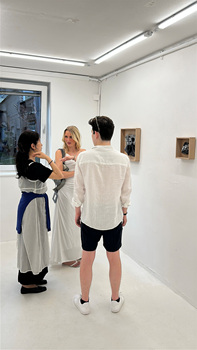
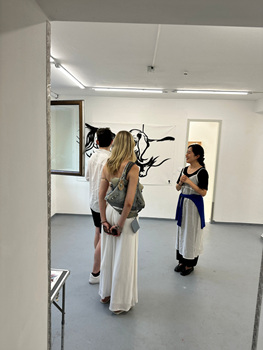
Koo Nahyun’s work begins precisely within this confusion of endlessly
repeated information in the media age. Through painting, the artist
asks how stable the images we have accepted as truth really are, and
what might remain concealed behind them. Yet her work does not remain
confined to the social problems of the digital age. It moves toward
more fundamental questions about human perception, memory, and the ways
in which we understand existence itself. Her practice is an attempt
to look at these questions with a seriousness and persistence that may
at times seem almost deliberately demanding.
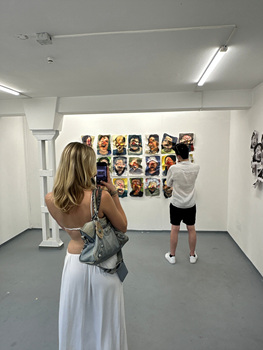
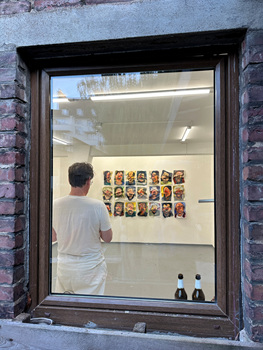
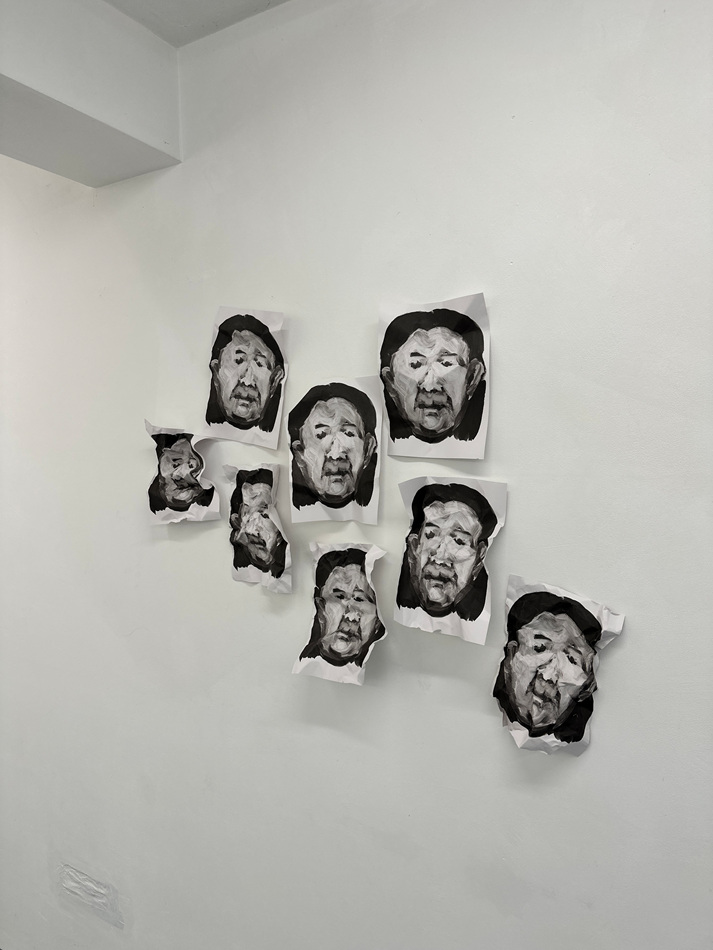
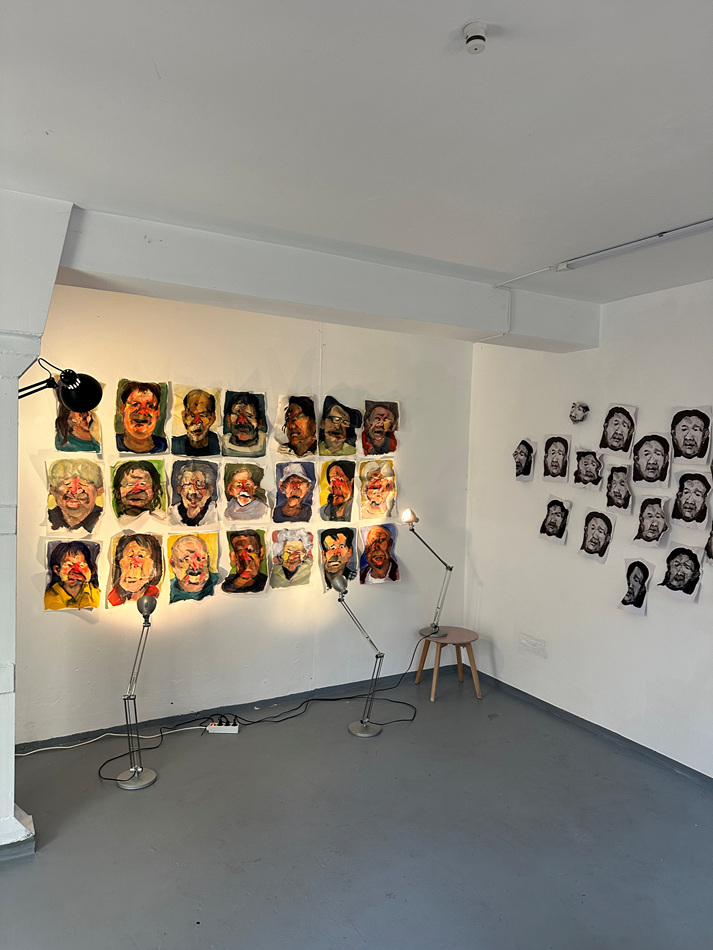
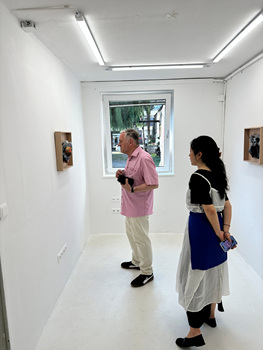
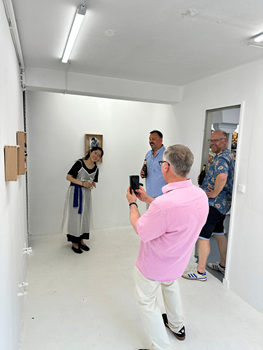
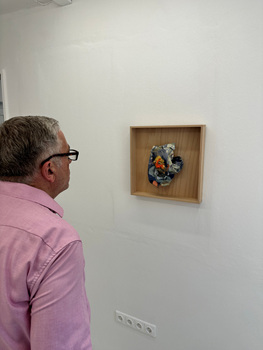
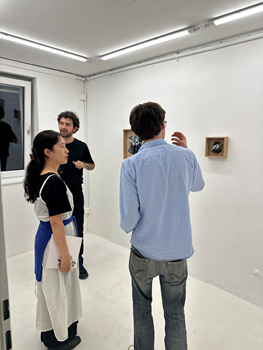
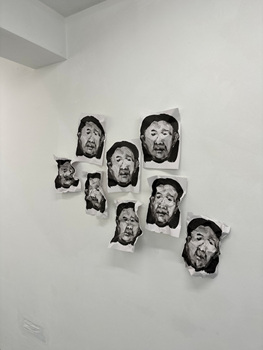
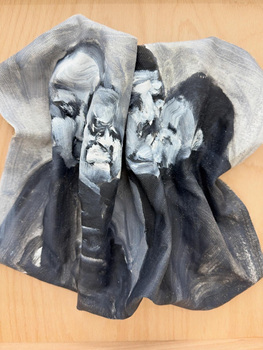
At the centre of this exhibition is the series CRUMPLE, which begins
with the act of crumpling a completed painting. Painting is generally
understood as a process of constructing thought and perception within
a given space?the flat surface?and gradually bringing that process toward
completion. Images and colours placed upon the surface acquire a certain
order and logic through the artist’s thinking. Yet at the very moment
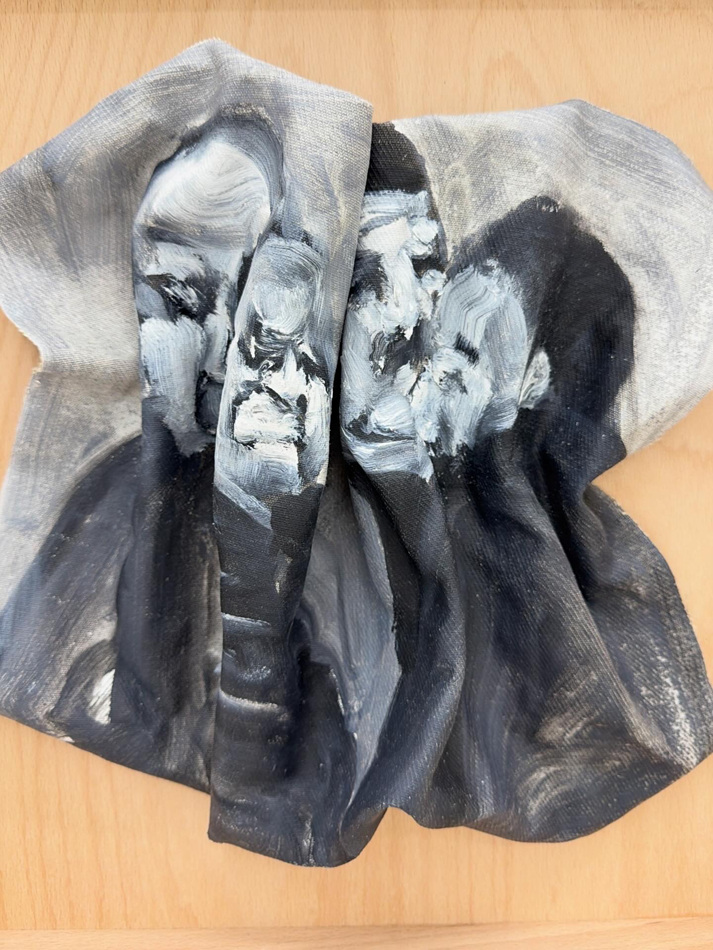
of completion, Koo crumples that space. The carefully composed surface
is ruptured by deep folds and fractures, and the system of meaning previously
held by the image is no longer fully valid. What matters is that, at
precisely this moment, something entirely different emerges. The image
we once understood and interpreted in familiar ways no longer exists
simply as a flat plane; it acquires an entirely different material presence.
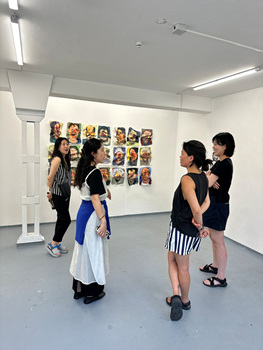
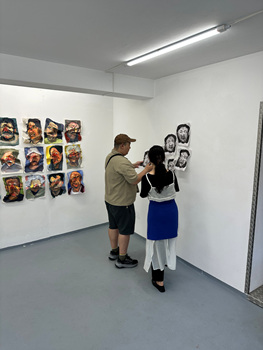
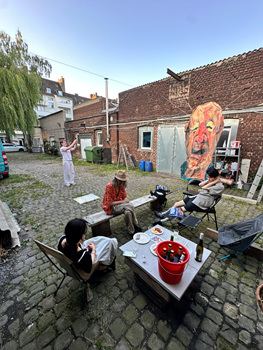
Importantly, this act is not a rupture intended merely to produce fragmentation
or estrangement. The crumpled surface instead creates new visual dimensions
that did not exist before. Unexpected light and shadow appear between
the folds, while the bends and depths of the surface reveal other emotions
hidden within the image. It is also the emergence of a new sensation
and a different experience of time?one that could never have existed
on an entirely flat surface.
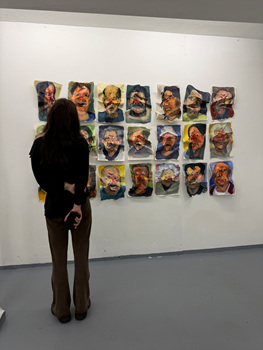
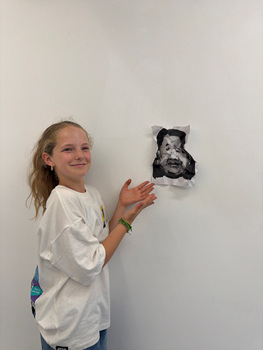
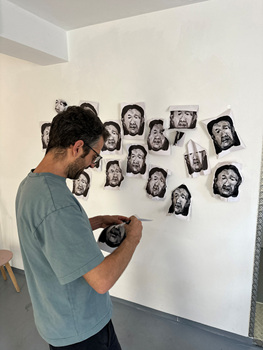
This act of crumpling is therefore more than a formal experiment. It
is also a metaphor for the way we understand the world. Human beings
tend to fix things within a single meaning and judge them accordingly,
but life is never flat. Our lives are always formed through overlapping
memories and experiences, emotions and relationships. The folds created
by the artist make these complex and unresolved conditions of life visible.
Rather than damaging familiar images from memory, the act becomes a
way of looking more deeply into the many experiences, emotions, and
unspoken stories contained within them.
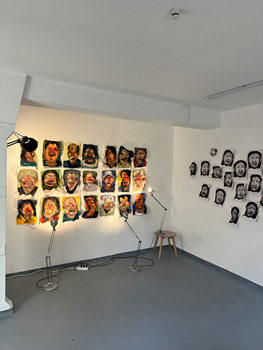
Through these crumpled surfaces, Koo addresses the contexts and realities
that contemporary society has lost. These include relationships erased
by an excess of information, individuals distorted by fragmentary perspectives,
and unfamiliar, anxious emotional landscapes produced by an age in which
judgement so often precedes understanding. The countless wounds and
traces remaining on the crumpled surface can be read as marks of the
misunderstandings and prejudices we experience within such a society.
At the same time, however, they are also traces of the possibility of
understanding and overcoming them. A fracture may be a boundary created
by separation, but it can also become an opening through which different
meanings begin to enter one another.
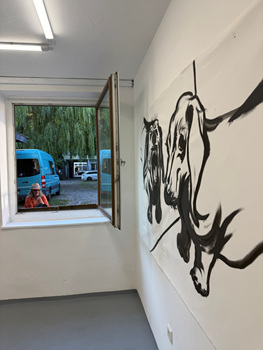
Wilma, the dog who repeatedly appears in this body of work, symbolically
embodies this concern. Wilma barking into an unseen darkness recalls
the contemporary tendency to react to images rather than to the realities
behind them. Yet the artist neither condemns nor ridicules this behaviour.
Her gaze is directed instead toward the human condition itself: our
inevitable existence within an incomplete understanding of the world.
We all attempt to understand the whole through only a fragment of it,
often insisting upon the world we already know. Perhaps Wilma barks
because of an equally desperate belief in what she sees?or in the world
she wishes to see.
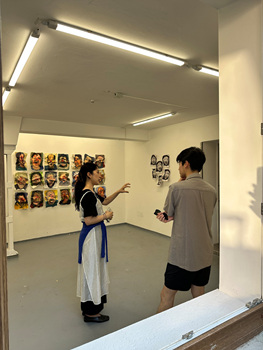
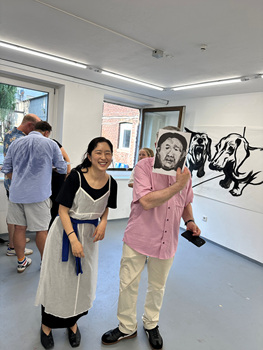
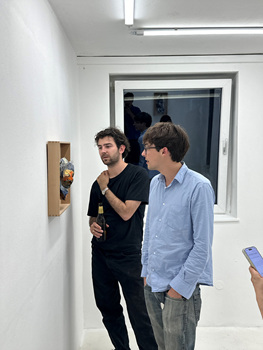
Ultimately, CRUMPLE is not simply about a crumpled surface. It is about
the countless folds created by human perception and experience, and
about the complex dimensions that exist behind the world we have taken
for granted. Through her crumpled paintings, Koo suggests that truth
cannot be reduced to a single surface or perspective. Life always exists
as an accumulation of multiple layers of time and memory, relationships
and emotions. What we fail to see often remains somewhere beyond our
immediate perception?in spaces and moments we do not yet know, much
like something hidden between the folds.
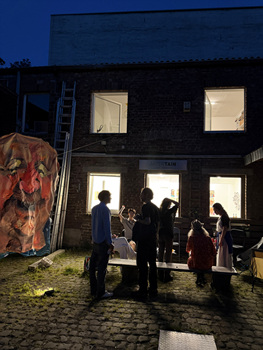
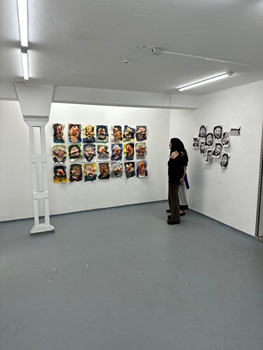
This exhibition in Dusseldorf is therefore a story about what becomes
newly visible through the very act of crumpling. These surfaces invite
viewers to imagine another possibility for understanding the world.
In doing so, they suggest that a surface marked by countless traces,
folds, and fractures may sometimes contain more truth than one that
appears perfectly ordered and complete.
Text by Gustav Daishik Yim
|